
Candy New Era
Early UX research and interaction exploration for Candy’s 2027 washing-machine range, supporting the definition of a new visual brand language through competitor analysis, user insights and product concepts.
Role
Strategy, Interaction
Company
Haier Europe
Year
2024
Duration
2 months
Problem
Candy was defining the visual brand language for its 2027 washing-machine range.
The goal was not only to refresh the product’s appearance, but to clarify how Candy could communicate a more contemporary and technologically credible identity across the full customer journey: from the first impression in-store to repeated use at home.
This required balancing two realities of the category. In physical retail, where washing machines are often assessed while switched off, controls, displays and material cues strongly influence perceived quality and value. At home, users need an appliance that handles varied fabrics and everyday situations while helping them balance speed, energy use, cleaning performance and garment care.
The challenge was to identify opportunities for a more differentiated Candy experience without adding complexity to an already technical product category.
Execution
I supported the early strategy phase through competitive research, qualitative-insight synthesis and interaction exploration.
I benchmarked smart functions, programme structures, control architectures, knob types, displays and feature communication across the market. I also reviewed competitor material presented at IFA 2024 to identify emerging directions in product interaction and positioning.
I framed the competitor benchmark through two complementary lenses:
- Retail, examining how products communicate technology, value and brand positioning at the point of sale.
- Everyday, examining how programme architecture, controls and smart features support users after purchase.
To understand how portfolios create perceived value, I mapped feature ladders across two comparable competitor brands. The analysis showed how functionality, interface technology and smart features changed across price tiers, helping the team identify patterns in range differentiation.
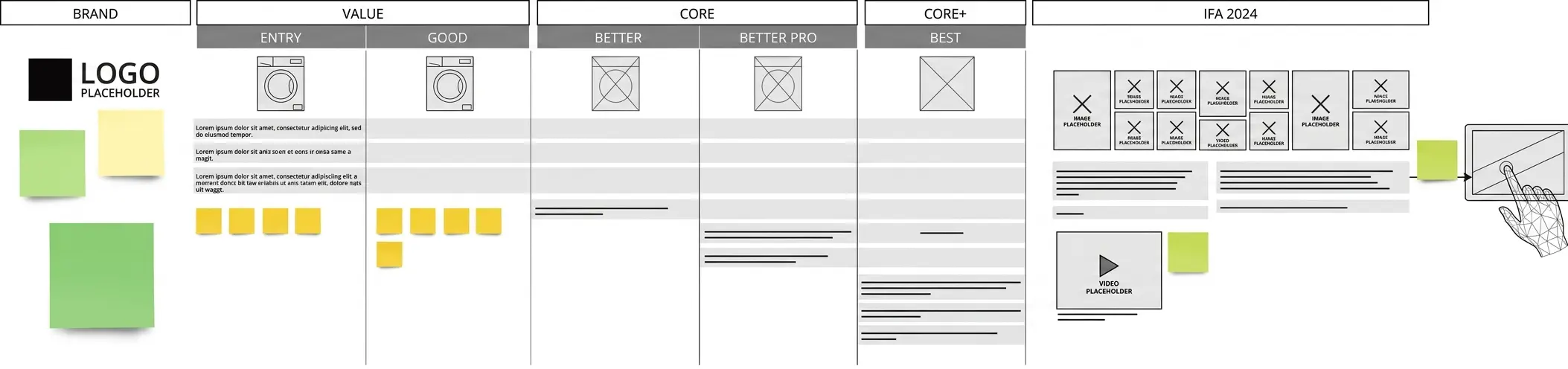
Together with two interaction designers, I analysed the interface architecture of ten competitor brands across their product ranges. We mapped display technologies —like LCD, LED and TFT—alongside electromechanical and electronic knobs, physical buttons and soft-touch controls. This created a shared overview of the technical and interaction patterns shaping the category.
In parallel, I synthesised a 150-page Ipsos report based on home visits with users in Italy and the UK. I consolidated the findings into a structured framework, separating Italy-specific behaviours, UK-specific behaviours and cross-market needs.
The research revealed recurring themes:
- users sought lower energy consumption and shorter cycles
- wanted reliable care for delicate garments and baby clothes
- often lacked confidence when navigating the growing number of washing programmes
These insights gave the team a clearer basis for prioritising future product and interaction directions.
Solution
I combined user needs with market evidence to explore early feature and interaction concepts for the new range.
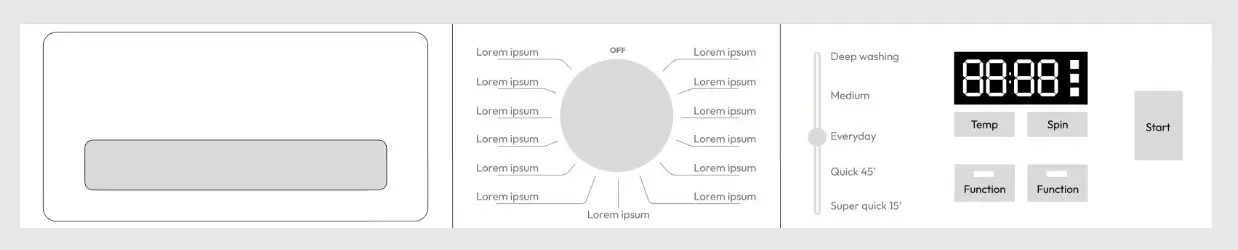
One direction addressed a recurring usability issue: programme selectors often combine overlapping categories, including quick cycles, fabric-specific programmes, activity-based options and technical settings. This structure asks users to understand the machine’s logic before they can express their own laundry need.
I reframed programme selection around the variables users could understand and evaluate more naturally:
- Fabric type (and delicacy).
- Level of soiling, and the consequent trade-off between speed and cleaning intensity
Based on this model, I explored a concept in which users selected the fabric type and soil level, then used a slider to choose between a faster cycle and a longer one — which naturally aligns with higher energy efficiency.
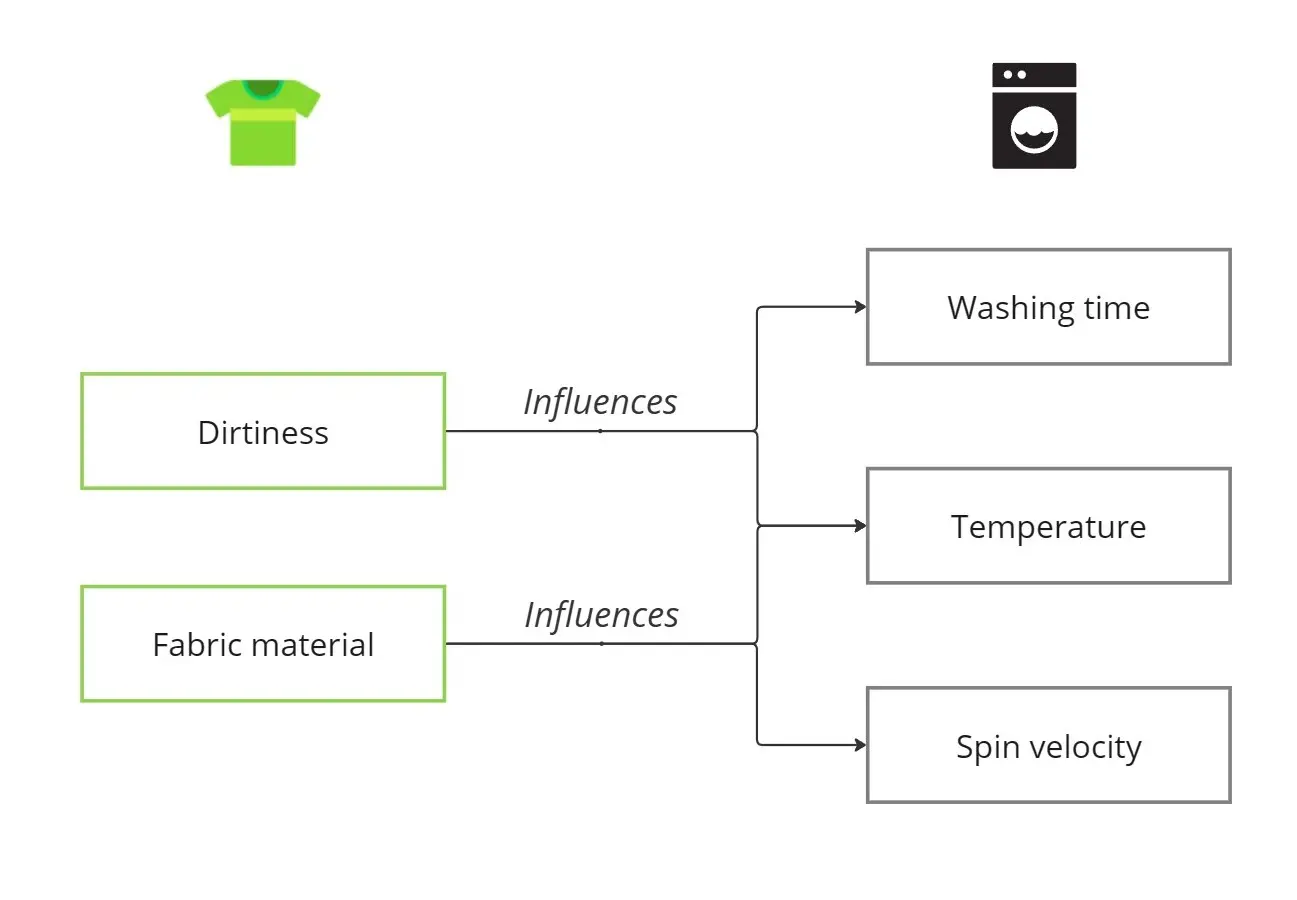
For example, recently worn sportswear could prioritise speed, while a full load of everyday garments could prioritise efficiency. Rather than manually configuring temperature, duration and spin speed, users could make one meaningful decision and let the product manage the technical parameters behind it.
The concept turned a fragmented programme architecture into a clearer interaction principle: personalise the wash around the outcome you need, not the settings you need to understand.
Results
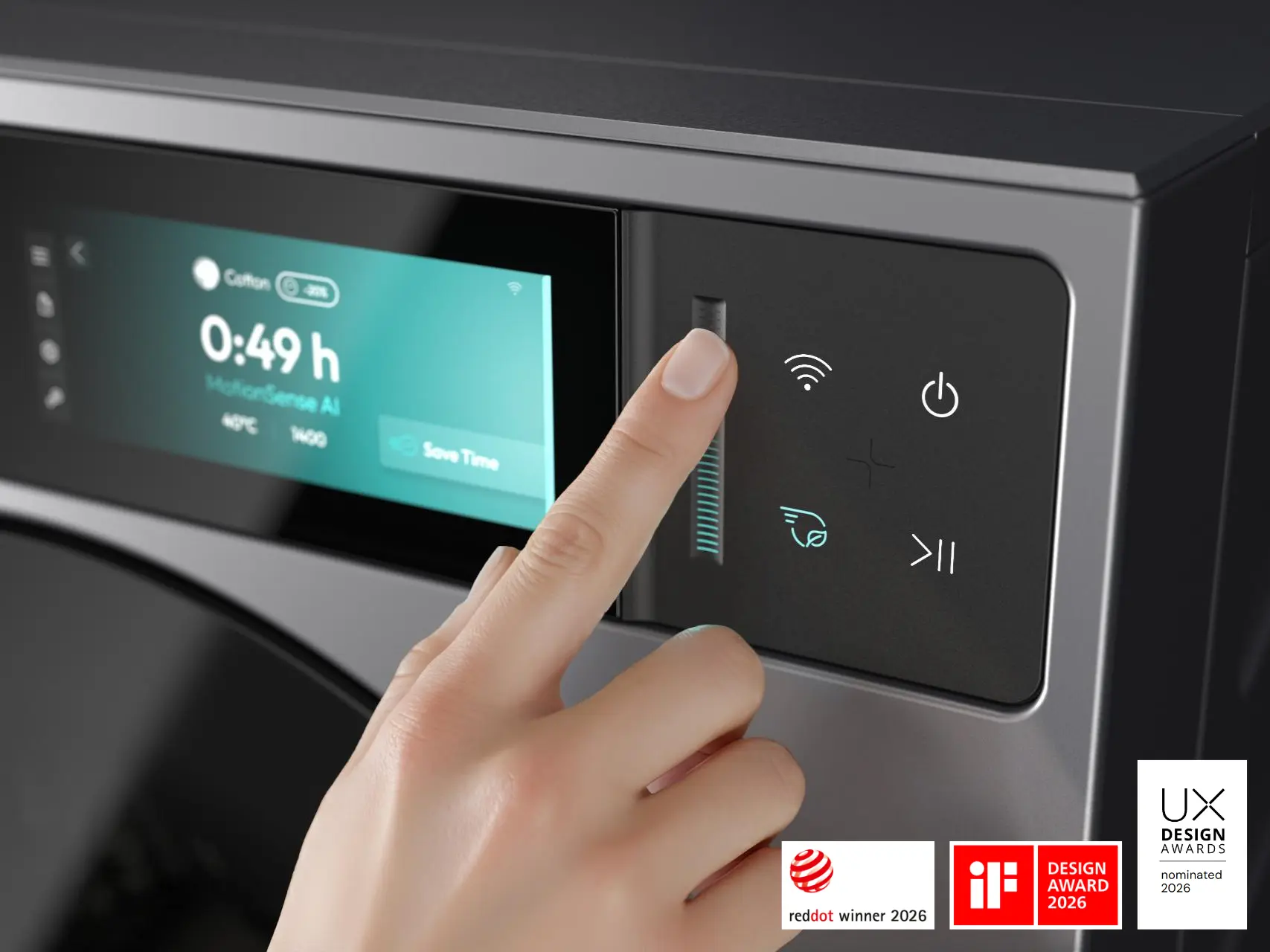
My internship concluded at that point, before subsequent product-development stages. The project later evolved into Candy MyWash 900, which received recognition from the iF Design Awards→ and Red Dot Design Award→ programmes in 2026, and was nominated for the UX Design Awards→ in the Product category.
I was not involved in the final screen interface, physical controls or menu flows. My contribution focused on the early research and concept phase, helping inform the product direction before its later development.